
After years of designing and developing homes in the US, Morehaus founder Alexandra Yonkov saw a unique opportunity. New homes were still built the way they were decades ago, while a new generation of buyers works from home, cares about clean air and water, and needs space to move, focus, and spend time with family.
So she created something that didn't exist yet: a ready-made townhouse model that gives property developers the designs, material specs, know-how, and implementation support to build these wellness-focused homes. The challenge was now how to package and build messaging for a practical, no-nonsense audience like property developers who aren’t used to this type of offering.
Introducing a new type of offer into a traditional industry raised three questions:
We ran a two-week positioning and messaging sprint focusing on two key problem areas: how to package the service, and how to build messaging that speaks to developers and addresses their key concerns.
Through structured workshops, the founder and team unpacked insights across four key dimensions:
We started with key insights into the motivation and vision behind Morehaus. The idea came from the founder's personal experience with toxic materials and poorly designed homes. Conversations with potential buyers confirmed it wasn't just her problem. Together with the founder, we distilled the core belief behind Morehaus: homes should be built with people's health and daily habits in mind, and developers need someone on their side to make that possible.
We mapped how the market talks about "healthy homes" and found that the category isn't clearly defined, no one owns the space, and the phrase itself was perceived as a gimmick. Builders talk about energy performance and certifications. Wellness designers bring aesthetics but no system. No one attacks the problem from all angles. Meanwhile, the meaning of luxury has also shifted. For today's buyer, it's no longer about marble countertops. It's about a home that supports how they work, move, and rest. That's where Morehaus fits perfectly.
While the new homebuyers are the segment that will ultimately benefit from this new type of building, Morehaus primarily serves the property developers. We dug into what keeps those developers up at night: slowing sales, sameness, fear of delays and cost creep, and pushback from their own architects and engineers. They want to stand out, but not at the cost of their process. And they need to understand the offer in under 10 minutes.
With that clarity, we shaped the offer into a plug-in townhouse model. It combines health-focused layouts, vetted materials and systems guidance, sales-ready language, and implementation support. The developer stays in control, and Morehaus provides the system and guidance.
The biggest learning: developers don't buy wellness. They want differentiation and less risk. "Wellness" only makes sense when it's translated into tangible components like clean air, filtered water, non-toxic materials, and layouts that work for today’s way of living.
Old:
Wellness-driven architectural blueprint
new:
A packaged, health-driven townhouse model that helps your homes stand out and sell faster, without disrupting your process.
With designer Irena Čuturić, we also refreshed the branding and website design to match the new packaging and message.
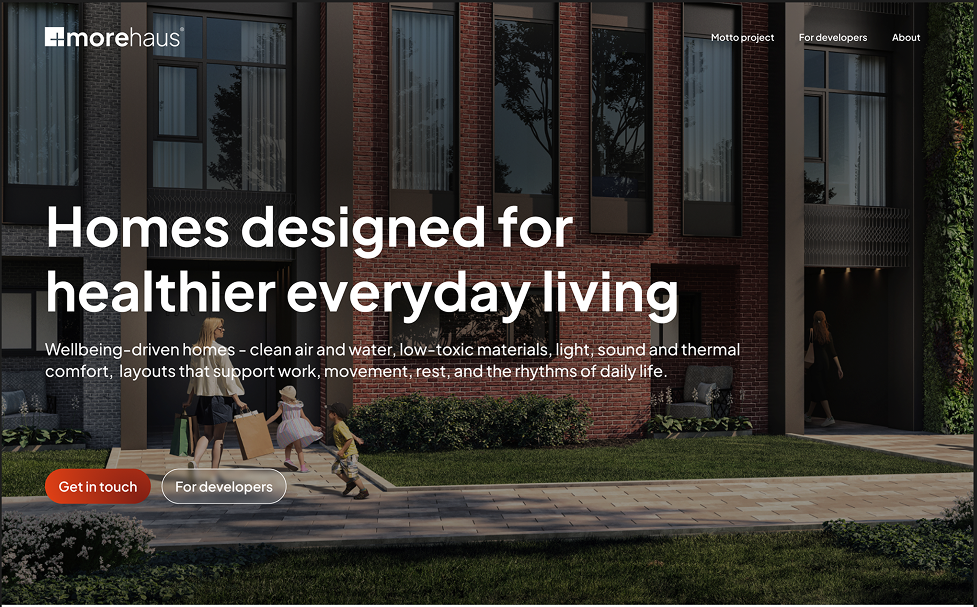
Morehaus now has a packaged townhouse model developers can understand in minutes: health-focused materials and systems, modern life incorporated into layouts, sales-ready language, and implementation support. The messaging speaks directly to what holds developers back: process disruption, delays, cost creep, and team pushback. The website was restructured around a homepage that speaks to buyers about how they work, move, and recharge at home, a dedicated "For Developers" page that lays out the model, and a Denver flagship project hub that documents the build as proof the model works. A buyer waitlist now turns interest into sign-up numbers that Morehaus can show developers as evidence of demand.

©0000 Singular Advantage. All rights reserved.
Back to top
